LASER CUTTING & NESTING
Learn how nesting software optimizes laser cutting layouts, improves sheet utilization, reduces scrap and helps manufacturers lower material costs.
Material waste is a major cost factor in sheet metal and laser cutting operations. When parts are poorly arranged on a sheet, valuable material can be left unused, increasing scrap and production costs.
Nesting software helps manufacturers create optimized layouts by automatically arranging multiple parts within the available sheet area. By considering part geometry, material type, thickness, quantities and cutting requirements, nesting software can improve material utilization while supporting efficient laser cutting.
In this guide, we explain how nesting software reduces material waste, improves sheet utilization, optimizes cutting layouts and helps laser cutting manufacturers achieve a more efficient production process.
Nesting software is a specialized CAD/CAM solution used to arrange multiple parts on a sheet, plate, or other raw material before CNC cutting. Instead of manually positioning every component, the software analyzes part geometry, dimensions, quantities, material type, sheet size, and manufacturing requirements to create an optimized layout.
For sheet metal manufacturers, nesting is an important step between part design and CNC production. A well-optimized nest can allow more components to fit on a single sheet, reducing unused material and helping manufacturers control material costs.
Large gaps between parts can result in unnecessary material waste. While some clearance is required for cutting and manufacturing considerations, excessive spacing can reduce the number of parts that fit on a sheet.
Optimized nesting attempts to minimize unnecessary empty areas while maintaining the required cutting conditions. This allows manufacturers to use a greater percentage of the available sheet.
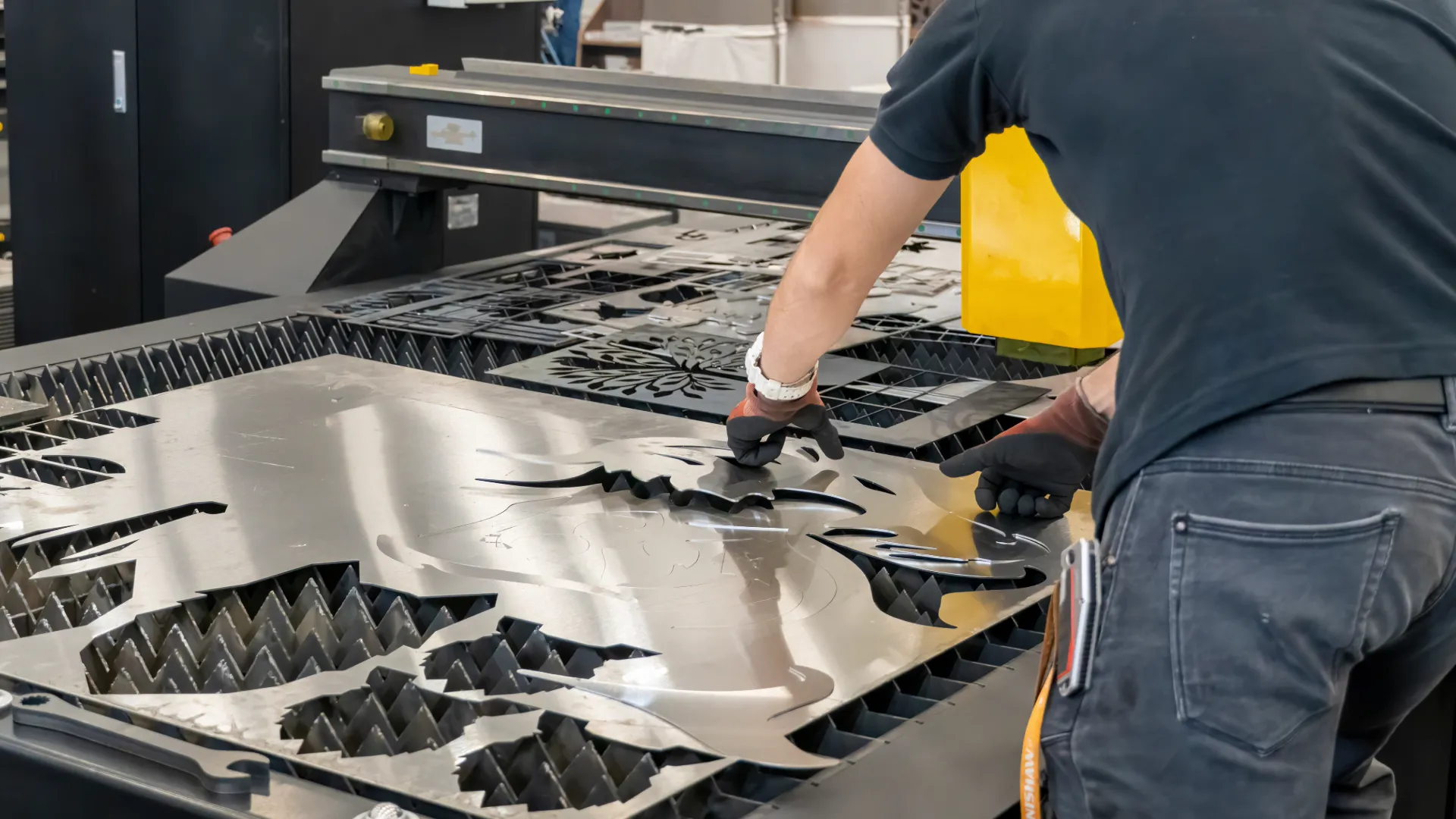
For many sheet metal manufacturers, raw material is a significant part of the overall production cost. Every unused portion of a sheet represents material that was purchased but did not become part of the finished product.
By improving material utilization, nesting software can help manufacturers reduce unnecessary material consumption. The actual savings depend on part geometry, material type, production mix, and the quality of the nesting strategy.
Part orientation can significantly affect how efficiently components fit together on a sheet. Nesting software can evaluate different orientations to find arrangements that improve material utilization while respecting manufacturing requirements.
For some components, orientation may also need to consider material grain, surface direction, bending requirements, or other downstream processes.
 CADCAM Automation Systems
Advanced CAD/CAM Software for Sheet Metal Manufacturing